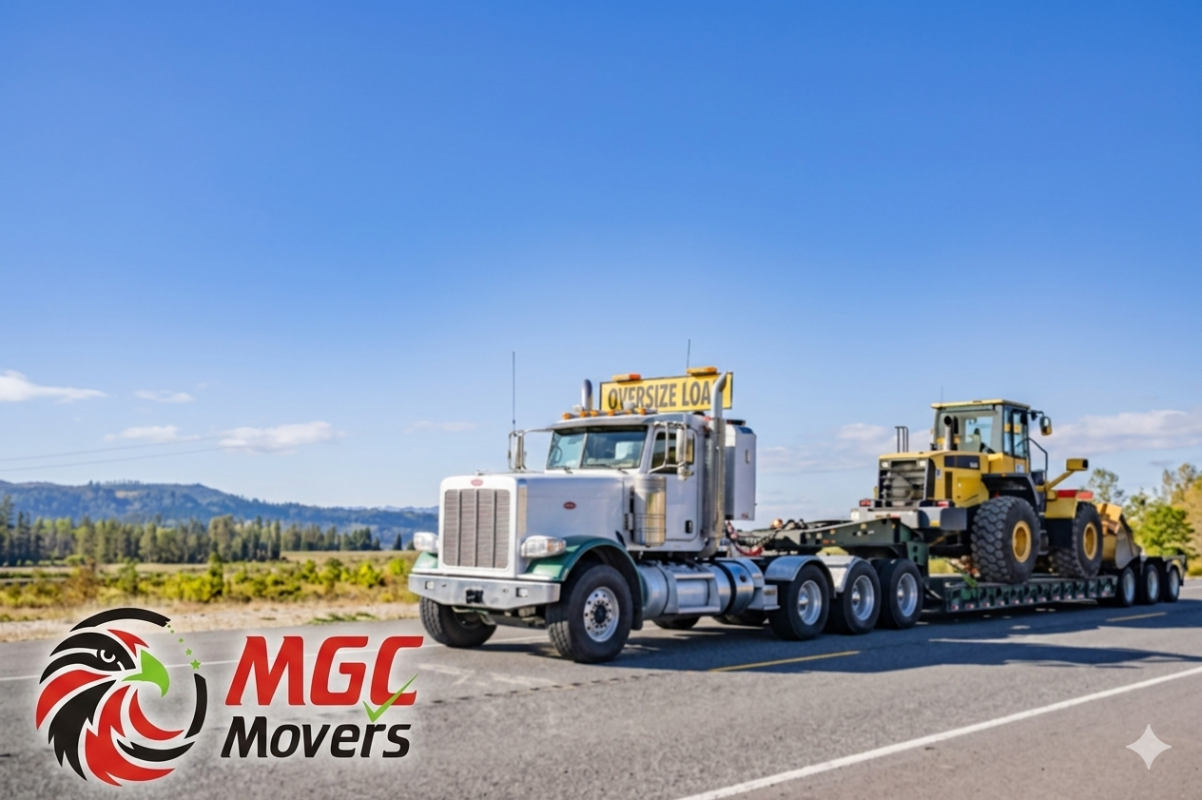
5 Heavy Equipment Moving Rules in Dubai 2026 | Avoid RTA Fines Moving heavy machinery in the UAE is no longer a “load-and-go” task. As of 2026, Dubai has implemented advanced smart-gate monitoring and updated emission standards that make compliance a financial necessity. Whether you are transporting a 30-ton excavator to a site in Sharjah or moving industrial forklifts within Dubai, one oversight can lead to impounded equipment and massive penalties.To keep your projects on track, here are the 5 essential heavy equipment moving rules for 2026. Rule # 1: Secure Smart RTA Permits & 24/7 Route Approvals In a significant update for 2026, the Roads and Transport Authority (RTA) and Dubai Police have extended 24/7 movement permits for heavy trucks to support logistics. However, this is not a free pass. Restricted Zones: The Airport Tunnel and Al Shindagha Tunnel remain strictly off-limits for heavy machinery. Permit Necessity: You still require a specific RTA movement permit for oversized loads. These permits define your “safe corridor” to avoid weak bridges or low-hanging infrastructure. Pro Tip: Apply via the RTA digital portal at least 48 hours in advance. For loads exceeding 60 tons, additional police coordination is mandatory. Rule # 2: Master the 2026 Weight and Dimension Caps The UAE has standardized weight limits to protect road integrity. Exceeding these without a “Special Load” permit triggers automatic fines via Weigh-in-Motion (WIM) sensors. Configuration Max Permissible Weight 2 Axles 21 Tons 3 Axles 34 Tons 6+ Axles (Max Cap) 65 Tons Standard Dimensions: Maximum width is 2.6 meters and height is 4.6 meters. Anything larger is classified as an “Oversized Load,” requiring escort vehicles and, in some cases, a police pilot. Rule # 3: Verify “Category 4” Licensed Operators The person behind the wheel is your first line of defense against legal nightmares. In Dubai, a standard driving license is insufficient for heavy machinery transport. The Standard: Drivers must hold a UAE Heavy Vehicle License (Category 4 or above). The Risk: If an unlicensed driver is involved in even a minor scrape, your insurance is instantly voided. In 2026, roadside inspections are more frequent, and “underqualified driver” fines have increased significantly. Rule # 4: Update to 2026 Environmental & Emission Standards Dubai is pushing for a greener logistics sector. As of January 1, 2026, all new heavy vehicles registered or imported into the UAE must comply with Euro 6B emission standards. Idle Limits: New regulations penalize excessive idling during loading and unloading in residential areas. Compliance: Ensure your transport fleet is maintained to these standards to avoid “High Emission” penalties during routine RTA technical inspections. Rule # 5: Navigate the Dubai-Sharjah “Peak Hour” Gates If your move crosses from Dubai into Sharjah, timing is everything. While Dubai has eased some 24/7 restrictions, Sharjah maintains strict “No-Entry” windows to manage traffic. Sharjah Peak Hours: Avoid entering Sharjah during 5:30 AM – 8:30 AM and 3:00 PM – 8:00 PM. Emirates Road (E611): Specific sections toward Sharjah are banned for heavy trucks between 5:30 PM and 8:00 PM. The Strategy: Use “Time Gates” planning. If you miss your window, park at a designated truck rest area; “side-of-the-road” parking is a guaranteed fine. Conclusion Heavy equipment moving in Dubai requires more than just a strong trailer—it requires a partner who understands the 2026 regulatory landscape. At MGC Movers, we specialize in high-stakes logistics, ensuring your machinery reaches its destination without a single AED in fines. Need to move heavy equipment today? Talk to an expert at MGC Movers or call 0509397518 for a compliant, stress-free relocation. Heavy equipment moving Dubai, RTA movement permit, oversized load transport UAE, machinery movers Dubai, MGC Movers, heavy vehicle restrictions Dubai 2026, Sharjah truck timings, villa moving Dubai, industrial relocation UAE.
